CREATIVE UK
ACTIVITY REVIEW 23-24
Creative UK is the national membership body for the Cultural and Creative Industries. We exist to champion brilliance and support innovation, by connecting and empowering creatives, advocating for the sector, and fighting for the opportunity for all to thrive in the creative economy.
Our vision is simple: we want to help power a world where creativity is valued and recognised as the driving force for our future.
HOW WE WORK
We test the limits of creativity
At Creative UK, we believe that the future economy is a creative economy.
In our policy and advocacy work, we shout loudly - and often - about the power of creativity to drive economic and social growth right across the UK. Everything we do as an organisation celebrates this.
It's why we invest in creative SMEs, via our £35m fund, Creative Growth Finance. It's why we're dedicated to championing our members, who create extraordinary work right across the sector every day. It's why we deliver support programmes, including Create Growth Programme and Creative Enterprise, to help businesses across the nation unlock that next level of success. And it's why, through Filming in England, we support high end film and TV to shoot right across the country.
In other words, we put our money where our mouth is.
We're proud to be the champion for the Cultural and Creative Industries, and in 2023/24, we worked hard to live our vision every day.
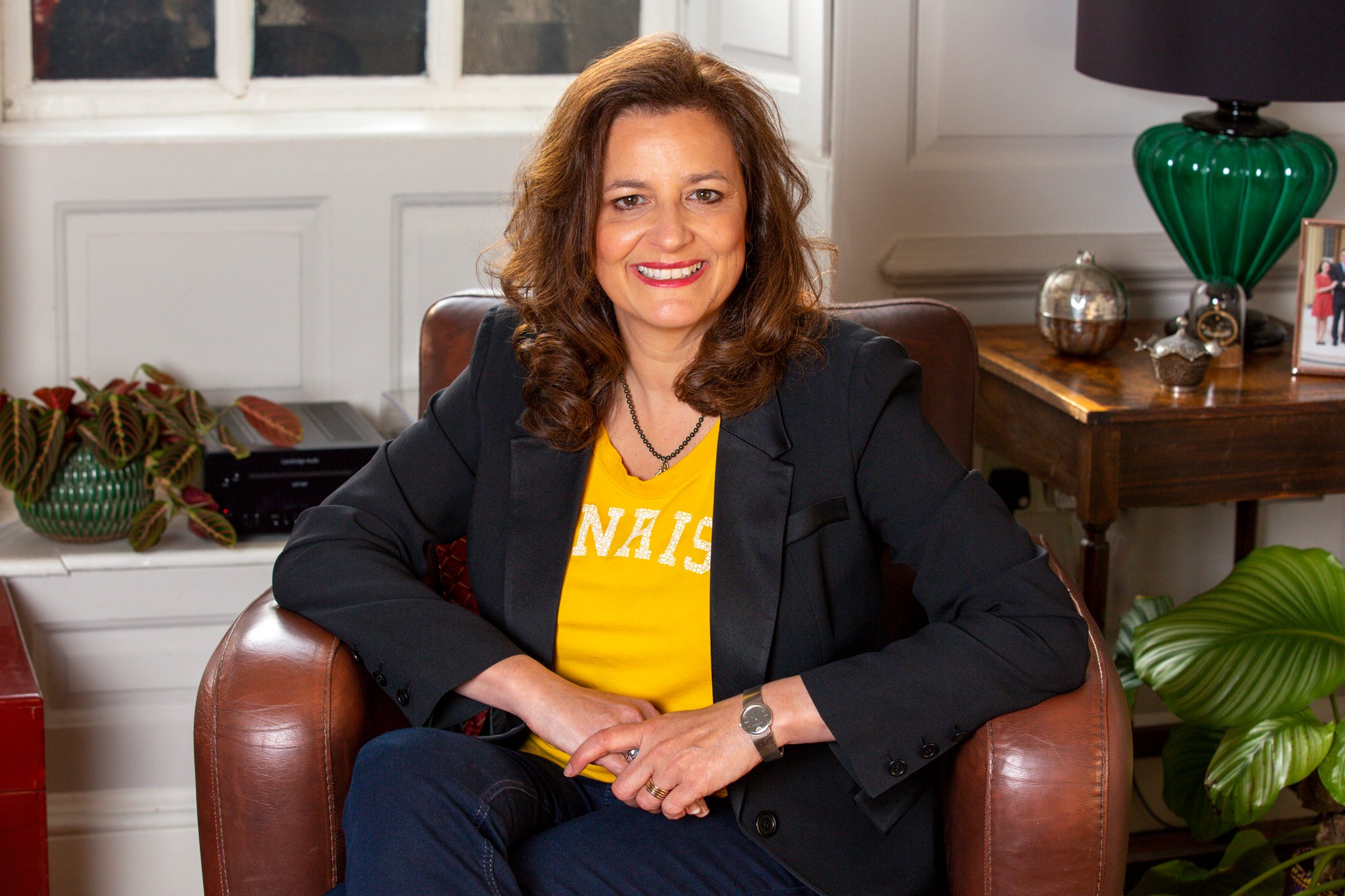
Caroline Norbury, OBE
A message from our CEO
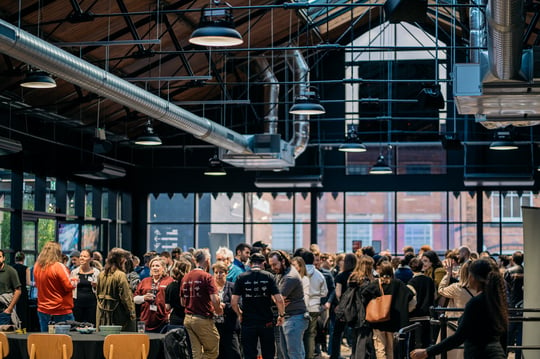
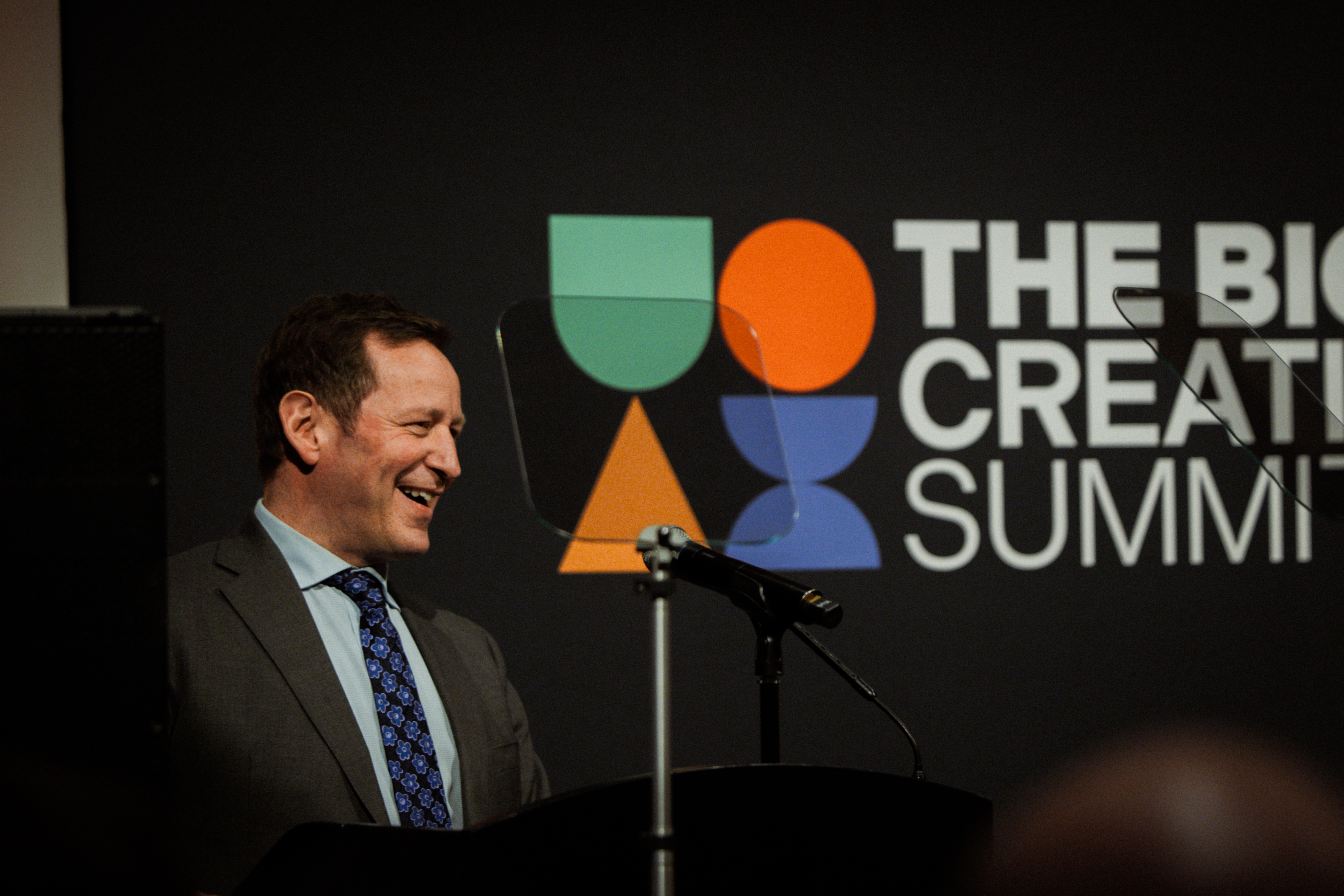
In March, Creative UK closed out Financial Year 23/24 with The Big Creative UK Summit, held at BAFTA London. Our Summits always feel like something of a landmark moment for this organisation. They're a chance to come together with our brilliant members and partners, as well as policy makers, investors, creative businesses and thought leaders. It's an opportunity for us to learn and listen - as well as to lead conversations around our shared challenges, and the solutions we have to overcome them.
I reflect on this now, because in my opening Summit address, I was tasked with capturing the State of the Nation for our sector. The truth is, the state was - and still is - complicated. And as I'm writing this introduction to our review of the year, that same level of complexity exists within the stories we share.
There's so much to be positive about. For more than a decade, the Cultural and Creative Industries growth rate has outstripped that of the wider economy. Our sector is continually referred to as a 'growth engine' - and for good reason. Our GVA contribution rose by 15% in the two short years after the pandemic - even through a period of economic instability.
It's this growth which drove us to launch Create Growth Finance II (CGF II) - a £35m fund in partnership with Triodos Bank. It's this growth which kept Creative UK working directly with 650 creative businesses. And it's this growth which was at the heart of all our advocacy messaging to the UK Government.
And yet there have been challenges. This financial year, the sector remained inhibited by lack of access to fit-for-purpose finance. Funding cuts were being sharply felt across the cultural sector, and the screen industries were reeling from ongoing challenges, including strikes and budget constraints.
Against this backdrop, our priority at Creative UK was to keep advocating for the sector in the policy arena, and to keep working directly with creative businesses and organisations - as an investor, a champion and a support network.
It's not all rosy, but I'm proud of what we achieved in this pivotal pre-election year. And in 2024 and beyond, we’ll be working closely with our members, partners and the UK Government to deliver on the promises that have been made and to harness the power of the Creative Industries to build a fairer, more prosperous world.
Until then…

In March, Creative UK closed out Financial Year 23/24 with The Big Creative UK Summit, held at BAFTA London. Our Summits always feel like something of a landmark moment for this organisation. They're a chance to come together with our brilliant members and partners, as well as policy makers, investors, creative businesses and thought leaders. It's an opportunity for us to learn and listen - as well as to lead conversations around our shared challenges, and the solutions we have to overcome them.
I reflect on this now, because in my opening Summit address, I was tasked with capturing the State of the Nation for our sector. The truth is, the state was - and still is - complicated. And as I'm writing this introduction to our review of the year, that same level of complexity exists within the stories we share.
There's so much to be positive about. For more than a decade, the Cultural and Creative Industries growth rate has outstripped that of the wider economy. Our sector is continually referred to as a 'growth engine' - and for good reason. Our GVA contribution rose by 15% in the two short years after the pandemic - even through a period of economic instability.
It's this growth which drove us to launch Create Growth Finance II (CGF II) - a £35m fund in partnership with Triodos Bank. It's this growth which kept us supporting over 650 companies through our regional support programmes. And it's this growth which was at the heart of all our advocacy messaging to the UK Government.
And yet there have been challenges. This financial year, the sector remained inhibited by lack of access to fit-for-purpose finance. Funding cuts were being sharply felt across the cultural sector, and the screen industries were reeling from ongoing challenges, including strikes and budget constraints.
Against this backdrop, our priority at Creative UK was to keep advocating for the sector in the policy arena, and to keep working directly with creative businesses and organisations - as an investor, a champion and a support network.
It's not all rosy, but I'm proud of what we achieved in this pivotal pre-election year. And in 2024 and beyond, we’ll be working closely with our members, partners and the UK Government to deliver on the promises that have been made and to harness the power of the Creative Industries to build a fairer, more prosperous world.
Until then…

The next phase of Creative Growth Finance
This landmark fund provides vital scale up finance, directed to post-revenue creative businesses presenting promising growth potential.

The perfect backdrop for feature film and high-end TV
Far far away, behind the word mountains, far from the countries Vokalia and Consonantia.

Growing regional reach and impact
Far far away, behind the word mountains, far from the countries Vokalia and Consonantia.

Putting our members at the heart of what we do
Far far away, behind the word mountains, far from the countries Vokalia and Consonantia.
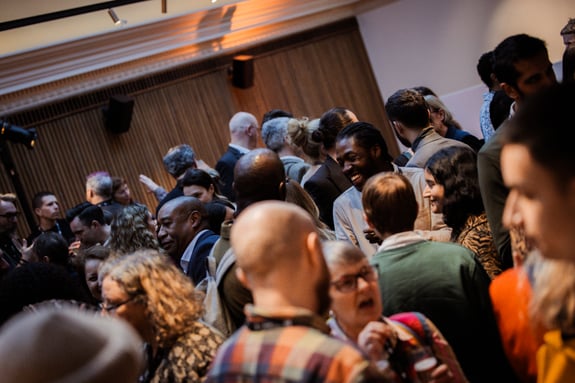
Over 111,000 creative individuals in our network


Over 630
creative businesses
supported

Policy & Advocacy
With a UK General Election expected in 2024, our Policy and Engagement team’s priorities were to continue to strengthen our convening power – both within our membership structure and the wider sector. We focused on identifying key policy priorities for any new administration to get behind, and communicating how – and why – these matter to our sector.
We continued to develop important relationships across all political parties, and actively sought to strengthen our engagement across multiple departments in Whitehall. One crucial objective for us this year was to integrate policy making for the Cultural and Creative Industries right across UK Government. Our sector’s impact reaches beyond the Department of Culture, Media and Sport – and we worked hard to ensure our messages were heard in the Treasury, the Department of Education, the Home Office and more.
This thinking was really brought to life when we published Our Creative Future: A Manifesto for the Cultural and Creative Industries. Created on the back of a wide-reaching consultation with our membership, as well as key stakeholders and our trade body representatives, Our Creative Future set out six key priorities for the sector. Broadly, this was: to invest in creative skills and education; explore new investment and funding models; protect IP in the age of AI; invest more in R&D for the sector; support the UK’s global standing through trade and exports; and unleash freelancers’ potential by modelling better ways of working. This document was covered favourably in the media by the likes of The Financial Times, Guardian, Times Radio and more.
Outside of the UK General Election space, we also sought to use key moments in the UK’s political calendar to raise issues of importance to the Cultural and Creative Industries. We were an active part of discussions around the Autumn and Spring Budgets; advocating for our members on a range of issues, from tax credits to a reform of the apprenticeship levy.
The Spring Budget of 2024, for example, saw the introduction of a new 40% tax credit for independent film producers and security and expansion of existing reliefs across film and TV post-production, orchestras and theatres. This was something we advocated loudly for, and were pleased to see come to fruition. Our reflections on what this means for the creative industries were covered in the media, via outlets such as the Telegraph and Hollywood Reporter.
With a UK General Election expected in 2024, our Policy and Engagement team’s priorities were to continue to strengthen our convening power – both within our membership structure and the wider sector. We focused on identifying key policy priorities for any new administration to get behind, and communicating how – and why – these matter to our sector.
We continued to develop important relationships across all political parties, and actively sought to strengthen our engagement across multiple departments in Whitehall. One crucial objective for us this year was to integrate policy making for the Cultural and Creative Industries right across UK Government. Our sector’s impact reaches beyond the Department of Culture, Media and Sport – and we worked hard to ensure our messages were heard in the Treasury, the Department of Education, the Home Office and more.
This thinking was really brought to life when we published Our Creative Future: A Manifesto for the Cultural and Creative Industries. Created on the back of a wide-reaching consultation with our membership, as well as key stakeholders and our trade body representatives, Our Creative Future set out six key priorities for the sector. Broadly, this was: to invest in creative skills and education; explore new investment and funding models; protect IP in the age of AI; invest more in R&D for the sector; support the UK’s global standing through trade and exports; and unleash freelancers’ potential by modelling better ways of working. This document was covered favourably in the media by the likes of The Financial Times, Guardian, Times Radio and more.
Outside of the UK General Election space, we also sought to use key moments in the UK’s political calendar to raise issues of importance to the Cultural and Creative Industries. We were an active part of discussions around the Autumn and Spring Budgets; advocating for our members on a range of issues, from tax credits to a reform of the apprenticeship levy.
The Spring Budget of 2024, for example, saw the introduction of a new 40% tax credit for independent film producers and security and expansion of existing reliefs across film and TV post-production, orchestras and theatres. This was something we advocated loudly for, and were pleased to see come to fruition. Our reflections on what this means for the creative industries were covered in the media, via outlets such as the Telegraph and Hollywood Reporter.
We collaborate with
250+
Member companies to influence government
5000+
Creative employees & students accessed our member benefits

THE BIG CREATIVE UK SUMMIT
1250+
Creatives attended our Big Creative UK Summit
30+
Countries attended
our festival
The next phase of Creative Growth Finance
We launched a
£35 million
fund with Triodos Bank for creative businesses
Perhaps the most significant output from 2023/24 was the launch of Creative Growth Finance II in September.
This £35 million fund – delivered in partnership with Triodos Bank - is the largest single fund to be delivered by Creative UK, following its investment of more than £50 million into the UK’s world-leading Creative Industries over the past decade.
This landmark fund provides vital scale up finance, directed to post-revenue creative businesses presenting promising growth potential. It’s targeted at businesses who bring change, disruption and new IP to the Creative Industries; harness creativity with technologies and supporting businesses; and are talent led.
Already, we have seen some real successes come from CGF II. Within the past year, four of our clients - Grid Finder, FuturLab, Dimension Studios and We Track Ltd. - were acquired or exited. This illustrates Creative UK’s unique position in the market to identify, pick and grow the best of UK Creative Entrepreneurial talent.
The launch of CGF II was covered widely and positively in the media, and we are keen to continue to grow our profile as a creative investor in this way.
Perhaps the most significant output from 2023/24 was the launch of Creative Growth Finance II in September.
This £35 million fund – delivered in partnership with Triodos Bank - is the largest single fund to be delivered by Creative UK, following its investment of more than £50 million into the UK’s world-leading Creative Industries over the past decade.
This landmark fund provides vital scale up finance, directed to post-revenue creative businesses presenting promising growth potential. It’s targeted at businesses who bring change, disruption and new IP to the Creative Industries; harness creativity with technologies and supporting businesses; and are talent led.
Already, we have seen some real successes come from CGF II. Within the past year, four of our clients - Grid Finder, FuturLab, Dimension Studios and We Track Ltd. - were acquired or exited. This illustrates Creative UK’s unique position in the market to identify, pick and grow the best of UK Creative Entrepreneurial talent.
The launch of CGF II was covered widely and positively in the media, and we are keen to continue to grow our profile as a creative investor in this way.
Case studies
Covatic
Covatic help media companies deliver private-by-design, addressable advertising without exposing personal data
Growing regional reach and impact
Creative UK is proud of its ‘boots on the ground’ approach to making impact. We work in regions right across the UK to deliver a diverse range of programmes and activity. In 2023/24, we supported 630+ creative companies through various regional and national programmes, whilst growing our cohort of specialist b2e business mentors and investors.
One such programme for us was the Culture and Creative Investment Programme in the North East. Funded by the North of Tyne Combined Authority, this is the first programme of its kind, offering a combined package of financial and business support. It is open to freelancers and businesses working in the culture and creative industries in North Tyneside, Northumberland and Newcastle. Already, we’re seeing the impact that a fund like this can create. So far, over £1m+ has been invested in loans and equity, and £0.5m dispersed via grants. More than 200 businesses have received business support, 35 jobs have been created, 60 jobs have been safeguarded and 14 apprenticeships/ traineeships have been developed. So far, we’ve also doubled private match investment in this programme – and we expect this to grow further.
Another key way that we work directly in regions across the UK is via the DCMS Create Growth Programme (CGP). Originally launched in 2022 by the Department for Culture, Media and Sport, CGP is designed to support the development of Creative Industries with high-growth potential across England.
As of this financial year, Creative UK is now delivering business support in six of the 12 regions participating in the Create Growth Funding: the North East, Cornwall, the South East, Devon, the West Midlands and West Yorkshire.
.gif?width=300&height=250&name=giphy%20(2).gif)
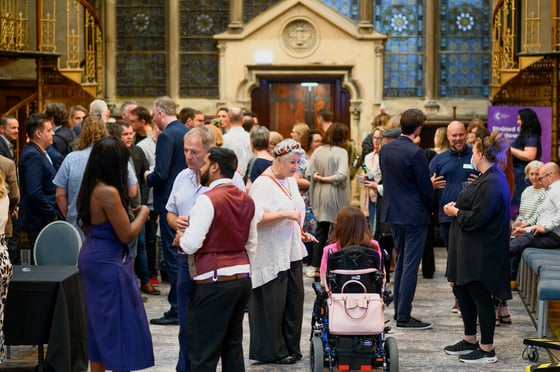
UK Business Support
Creative UK delivers business support in 6 of the 12 regions participating in the Create Growth Funding:
North East, Cornwall, South East, Devon, West Midlands and West Yorkshire.

+200 businesses
received business support in the North East
Creative UK is proud of its ‘boots on the ground’ approach to making impact. We work in regions right across the UK to deliver a diverse range of programmes and activity. In 2023/24, we supported 630+ creative companies through various regional and national programmes, whilst growing our cohort of specialist b2e business mentors and investors.
One such programme for us was the Culture and Creative Investment Programme in the North East. Funded by the North of Tyne Combined Authority, this is the first programme of its kind, offering a combined package of financial and business support. It is open to freelancers and businesses working in the culture and creative industries in North Tyneside, Northumberland and Newcastle. Already, we’re seeing the impact that a fund like this can create. So far, over £1m+ has been invested in loans and equity, and £0.5m dispersed via grants. More than 200 businesses have received business support, 35 jobs have been created, 60 jobs have been safeguarded and 14 apprenticeships/ traineeships have been developed. So far, we’ve also doubled private match investment in this programme – and we expect this to grow further.
Another key way that we work directly in regions across the UK is via the DCMS Create Growth Programme (CGP). Originally launched in 2022 by the Department for Culture, Media and Sport, CGP is designed to support the development of Creative Industries with high-growth potential across England.
As of this financial year, Creative UK is now delivering business support in six of the 12 regions participating in the Create Growth Funding: the North East, Cornwall, the South East, Devon, the West Midlands and West Yorkshire.
More case studies
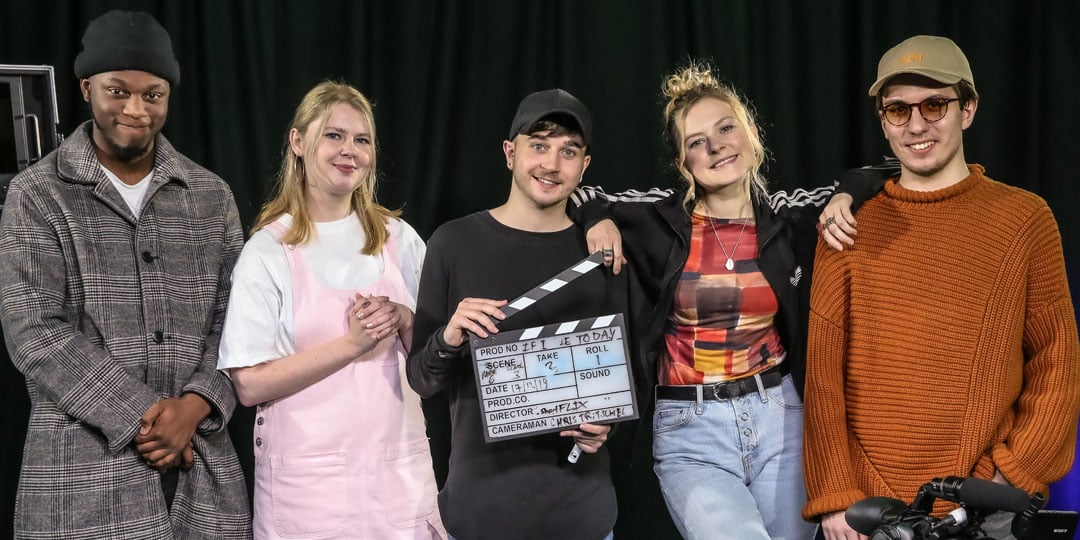
ShortFLIX
Support for UK filmmakers was also delivered through our partnership with Netflix UK on Breakout, which selected six filmmaking teams for paid script development and a lab programme to further develop the skills required for making a genre film.
The perfect backdrop for feature film and high-end TV
We supported 200
high-end film & TV productions.
That's £200m
of economic impact
.gif?width=300&height=250&name=giphy%20(2).gif)
Despite a difficult period for the film and TV industry, Filming in England continued to offer bespoke, comprehensive support to feature film and high-end TV productions – working with local Film Office partners on titles such as Mission: Impossible - Dead Reckoning Part One; The Crown and Mr Bates vs The Post Office.
Our Filming in England team work to support further spread in the levels of feature film and high-end TV production activity taking place across the English regions, ensuring communities across the nation enjoy the profile, job opportunities and economic benefits that the sector generates. During this period, over 200 feature film and high end TV productions were filmed on location, generating an estimated £200million local economic impact and £65million direct GVA. We championed 6,000 freelancers and connected 1,000 supply chain businesses and grew our Filming in England Partnership to 250 member organisations and actively supported over 100 local authorities across 6 English regions.
Beyond this, we also kept working to connect and support the sector in other ways. We held quarterly sold-out Regional Connect events, which created opportunities for freelancers, supply chain businesses and local partners to come together, network and facilitate connections.
We launched a new Local Economic Toolkit, to help local authorities understand the economic impact of supporting film and TV production in their area.
Outside of Filming in England, Creative UK supports Film & TV in a variety of other ways. This year, the team secured a £250k content fund, working with the West Midlands. We plan to increase the value of this fund by working with other partners. The West Midlands IP fund has been secured for rollout in 2024/5, investing £200k funding into local content companies.
Via the West Midlands Production Fund, we invested £300k into series 2 of DI Ray for ITV. The show was set, based and filmed entirely in the West Midlands - it was the debut original TV series of the writer Maya Sondhi who is from the region, and was exec produced by Jed Mercurio who is also from the region. DI Ray is the first original returning high-end TV series from the region to be recommissioned since Hustle.
The team continue to model new impact funds, and run other projects for the sector, including a project with WPP to help secure and develop more female creative directors.
Despite a difficult period for the film and TV industry, Filming in England continued to offer bespoke, comprehensive production support to feature film and high-end TV services – working on titles such as Mission: Impossible - Dead Reckoning Part One; The Crown and Mr Bates vs The Post Office.
With £565,000 from BFI’s National Lottery Funding, Filming in England delivered a huge benefit to the public and the sector. During this period, 200 high-end film and TV productions were supported, generating £200m of economic impact. We worked in over 100 regions, creating an estimated 800 jobs and supporting around 1,000 associated facilities companies.
Beyond this, we also kept working to connect and support the sector in other ways. We held quarterly sold-out Regional Connect events, which created opportunities for freelancers, supply chain businesses and local partners to come together, network and facilitate connections.
We launched a new Local Economic Toolkit, to help local authorities understand the economic impact of supporting film and TV production in their area.
Outside of Filming in England, Creative UK supports Film & TV in a variety of other ways. This year, the team secured a £250k content fund, working with the West Midlands. We plan to increase the value of this fund by working with other partners. The West Midlands IP fund has been secured for rollout in 2024/5, investing £200k funding into local content companies.
Via the West Midlands Production Fund, we invested £300k into series 2 of DI Ray for ITV. The show was set, based and filmed entirely in the West Midlands - it was the debut original TV series of the writer Maya Sondhi who is from the region, and was exec produced by Jed Mercurio who is also from the region. DI Ray is the first original returning high-end TV series from the region to be recommissioned since Hustle.
The team continue to model new impact funds, and run other projects for the sector, including a project with WPP to help secure and develop more female creative directors.
800
jobs created
in film & TV

More case studies